Showing posts with label literature. Show all posts

Sunday, August 24, 2008

The War of the End of the World

Does anybody know what the image on the cover of this book means in the context of Christian narratives about the end of the world? The wikipedia article on Eschatology doesn't have anything. (I didn't read it fully, I just searched for "dog"). May be it is just a generic picture with dog as devil fighting the angel (of death?) but it does seem much more specific than that or may be it is not related to all this at all. The edition I read from had a different, much more abstract cover with a vulture in the sky and an abstracted and bleak landscape below littered with skulls. Anyway, I was thinking about this book after this discussion about Mario Vargas Llosa and the Latin American novel on Madhuri's blog. This is my personal favourite of his novels and I think it is a must-read for anyone interested in latin american culture, politics and history. At over 600 pages it is also a huge novel but at the same time a complete page-turner too.

A few words about the novel now that I am at it. Some people complain that it is rather simple and straightforward in style and and that Vargas Llosa eschews experimentation which has become one of the hallmarks of the latin american novel (and I am not talking about the awful and rather condescending tag of "magical realism" here). I will be the last person to defend stylistic conservatism but in this case the form of the novel is determined by what Vargas Llosa was aiming to achieve - that is, to represent a real historical event in all its complexity and the multitude of often contradictory voices without privileging one over the other. This is in fact a great example of what the Russian critic Mikhail Bakhtin called the "polyphonic novel," and it is specially important for Vargas Llosa to follow this idiom because it is such a politically charged subject that it could have easily become a propagandist work if handled in any other way.

The novel fictionalizes a real event from Brazil's modern history - the war of Canudos which took place in the late nineteenth century which was also one of the events which came to define modern Brazilian national identity by providing it with a legitimacy both against the monarchist forces and the provincial power centres. In Vargas Llosa's hands this story also becomes emblematic of violent entrances into modernity that many other third world countries went through too - the rise of the modern nation state and all the violence that it necessarily entailed.

The story that Vargas Llosa tells is extremely complex and cast incredibly huge and in fact I have forgotten lots of details in the last 4-5 years but surprisingly a lot of this book has stayed with me all this time. The main thread of the novel is about the rise to power of the central character (even though he always remains mysterious and in the background) Antonio the Counselor, a priest and a preacher, who thinks that the modern democratic and secularized republic which has overthrown the Christian monarchy is not only a repudiation of Christian teachings but in fact an agent of Satan and the harbinger of the end of the world. His cult is actually one of the many millenialist cults which arose from time to time in medieval Europe too, which also gives Llosa a chance to link this particular event to a larger current of history itself, not just religious but also modern Utopian political beliefs which were similarly propelled by similar messianism. The Counselor attracts a massive following consisting of bunch of colourful characters - bandits, prostitutes, beggars, circus freaks, in general poor, desperate and starving people of the region and also a European anarchist who sees in Counselor's utopian pursuit a reflection of his own ideological thinking. Of course it all ends badly and Vargas Llosa doesn't spare any of the details of the brutal and violent fate that most of these characters meet in the end.

What makes it so successful and powerful is, as I said above, its polyphonic complexity. Llosa was himself going through an ideological transformation at that time after having publicly broken off from the leftist movement but he never lets ideological bias colour his judgement at any place. He presents each of the characters on every side of the political spectrum with their own indirect interior monologues so that the reader himself can judge and think about their actions or else what happens to them. In the end a powerful feeling of despair does remain - the feeling of the essential senselessness and meaninglessness of history, the idea that history is just a sequence of calamities with no purpose at all, other than senseless violence itself. I don't think that this bleak and extremely pessimistic vision of history with its anti-Utopianism is the only valid reading of the novel. Like any complex and authentic work of art this leaves room open for multiple different interpretations. The book is actually dedicated to Brazilian writer Euclides da Cunha who wrote the first account of the war based on his first hand experiences called Rebellion in the Backlands. It is considered an important literary work in its own right though it is not as famous in the English speaking world. There is a character of a journalist in the novel which seems to be modeled after him. In a rather plain and transparently metaphorical way Llosa makes him myopic - implying that even though he is able to see the events clearly he still misses the larger philosophical meaning of what happens. This is also a statement by Llosa justifying his own work as a novelist too. There are truths that only a novelist can find, truths that will always escape journalists and historians no matter how diligent, sincere and honest they may be. In short it is a huge novel but every bit worth the time and effort.

Wednesday, August 20, 2008

Senselessness

Senselessness is the eighth novel by Salvadoran writer Horacio Castllanos Moya but first to be translated into English and having now read it I am hoping that his publisher and translator are already working to bring out his other works in English for it is truly a remarkable and a very original book.

As has been noted in other reviews Moya is a great admirer of Thomas Bernhard and the prose style in the book feels like a conscious homage to him, specially in the way his sentences go on to great lengths and certain phrases are repeated as if in a musical refrain, which in effect manages to capture a state of mind which is breaking apart and going under the weight of its own consciousness. Other than that, Bernhard's peculiar style of narration also achieves this strange intermingling of "voices" and this suits Moya's subject in the book too.

The unnamed narrator of Senselessness, who is living in exile in a neighbouring country, has taken up the burdensome job from the catholic church of proofreading and editing 1,100 pages of confessions, testimonies and evidences of massacres of the native population and other atrocities perpetrated by the army. He soon finds himself falling under the spell of the strange poetics of the horror stories in the first person testimonies in the report: "I am not all complete in the mind" says one and at other place another voice laments, "The houses they were sad because no people were inside them..." He notes these down in his personal notebook and obsesses about the "sonority" and "curious syntactic constructions", comparing them to the poetry of Cesar Vallejo who tried to incorporate indigenous voices into his poetry too. He also decides not to share one of these fragments with his employer and colleague because he thinks (and this underscores what I think is the main theme of the book too) that they "might see me as a deluded literati seeking poetry where there were only brutal denunciations of crimes against humanity ... that he would think that I was a simple stylist who wasn't paying any attention to the content of the report."

This is only half of the novel. The other parallel narrative track follows his growing paranoia as he distrusts both the church and the military, which still employs one of the perpetrators of the atrocities, in fact as a senior officer even. He is also a compulsive drinker and is obsessed with sex. All of this result in some strange humour which is all the more unsettling because it feels so out of place. Still there is one "sex-scene" which is really one of the most comical things I have read in a long time. I still don't exactly know what to make of this part of the novel but the remarkable end does put a perspective to all the paranoiac ravings that preceded it.

Lastly, and this may be a potential spoiler, the book reminded me of Francisco Goldman's The Art of Political Murder (Review from new york times here) which was widely reviewed last year and which talks of a very similar incident in Guatemala. I haven't read the book but it seemed Moya is using the same real life incident as a starting point for this book. Of the few reviews I read of the book, none of them have mentioned it.

In the end, neither the Thomas Bernhard homage nor the real life connection take anything away from it or diminish Moya's achievement in any way. It is one of the most unusual and original books I have read in quite some time. Also, I wish they had kept the original Spanish cover of the book. It wonderfully captures what is inside.

Update: This article talks about the background in detail and also mentions the truth and reconciliation commission in Guatemala which inspired this book.

Also, among other reviews I liked this one in the village voice. Another enthusiastic (and exhortatory) review from Kubla.

Saturday, December 22, 2007

The Golovlyov Family

Mikhail Saltykov-Shchedrin's The Golovlyov Family has been called "the gloomiest novel in all Russian literature" by D. S Mirsky, who wrote the first scholarly history of Russian Literature. It certainly is a very dark and uncompromising work, even a shocking and disturbing at places. Stylistically it is very similar to Gogol's Dead Souls. In fact some of the caricatures and portraitures specially of the landowners are derived directly from Gogol's classic. What Shchedrin adds of his own is the Swiftian rage and his extreme vision of human beings completely dehumanized by mindless traditions, social institutions, shallow religious nonsense and just plain unthinking ignorance.

Such is the overall negativity of the book that from a realistic perspective the story and the characters sound a little unconvincing. James Wood in his introduction notes it as well:

"At times The Golovyov Family seems less a novel than a satirical onslaught. Its relentlessness has the exhaustiveness not of a search for the truth so much as the prosecution of a case. Its characters are vivid blots of essence, carriers of the same single vice. Indeed, Shchedrin would seem to enjoy shocking the reader by annulling the novel's traditional task, that of the patient exploration, and elucidation, of private motives and reasons as they are played out in relation to a common condition. Instead, he gives us his sealed monsters, people whom we cannot explore since they are shut off from the moral world."

Not the kind of book one should read at a nice time like this when everybody is supposed to have some fun but certainly it deserves a place on the reading lists of everybody interested in the nineteenth century Russian Literature.

James Wood's introduction in pdf format is available here.

Monday, October 08, 2007

Javier Marias: Dark Back of Time

It is very difficult to describe what Javier Marias' Dark Back of Time ("a false novel" as he himself calls it) is all about. Half of the book, certainly the most entertaining section is about the publication and subsequent reception of his Oxford-set novel All Souls in English (I had earlier written about it here). As he claims quite a few real-life people in and around Oxford took it to be a roman a clef and found themselves portrayed as fictional characters, even to the extent that started behaving like the characters in the novel. A few were satisfied and happy but most others not so much. He also clarifies that he doesn't have a wife named Luisa back in Madrid as the narrator claimed in the earlier novel, much less he is the father of a small baby. He basically writes about his encounters with these real-life people and records their observations and comments and muses about the nature of fiction and representation of reality.

Rest of book is a bit tedious and I frankly lost track of the whole thing quite a few times reading it. It may appeal to geeks, trivia hunters and obscure books enthusiasts but it doesn't work entirely on its own as a work of literature. He basically recounts the biographies of a number of eccentric Englishmen (Marias seems to a passionate anglophile) punctuated by his own commentaries about the nature of time and fiction and its relationship with reality. All of these people and their histories are actually real, Marias even has newspaper clippings, photographs and maps as if to "prove" that what he is talking is indeed real and he is not making them up, though in the end the whole thing becomes even more mysterious that it was before. In this the book invites comparisons with W.G. Sebald's The Rings of Saturn which also had the same structure but which is a much more interesting work because Sebald's ideas and his style give the anarchistic musings a deep, though still somewhat mysterious, sense of unity and purpose.

Marias, again like Sebald, comes back repeatedly to the nature of time, specially the lost time, people forgotten and taken over by oblivion. At one place in the book he explicitly says that he comes back repeatedly to:

What I've called in several books "the other side of time, its dark back", taking the mysterious expression from Shakespeare to give a name to the kind of time that has not existed, the time that awaits us and also the time that does not await us and therefore does not happen, or happens only in a sphere that isn't precisely temporal, a sphere in which writing, or perhaps only fiction, may -who knows -be found.

I had come across this phrase in his All Souls and at that time I didn't know that he took it from Shakespeare. It is actually a somewhat modified version of the phrase used by Shakespeare in The Tempest, where Prospero is asking Miranda of the time before she came to the island, "What seest thou else/ In the dark backward and abysm of time?" It is a very evocative phrase. Marias interprets it to mean not just the irretrievable past but also the future which will never come, signifying our own mortality and finitude of our lives.

This section where he tells the story of these forgotten writers and adventurers I found a bit tedious as I said earlier. Much of it revolves around John Gawsworth, a forgotten writer of fantastic fiction, who died in utter destitution and was also the reigning poet-monarch of the kingdom of redonda. As it turns out Marias has now taken over the kingship and has also awarded various dukedoms, most notable to people like Coetzee, Almodovar and Pinter. He also writes about a writer who died in Mexico of an accidental gunshot at a new year revelry and a spy who was executed by the Germans. He also talks about his elder brother who died before Marias was born and so many other things that I have, I think, already forgotten. All this meanderings and seemingly random excursions drive the same point, at least that's what I think, that there is no order in the facts of the world, time is an all powerful force of destruction and in the end fiction and the faculty of imagination is our only hope for resistance against this anarchy and inevitable oblivion.

Some more information about the book is there on the complete review which finds it "odd but well done" which seems pretty accurate to me.

******

As a bonus a hilarious extract from the book about "The Podium Effect" (this is after he reveals that he is not married, much less has fathered a baby)

"So it isn't true?" a student insisted. "Because we were all convinced you had a small baby." I remember she said "convencidas todas" in the feminine--"we women were all convinced"--perhaps not so much because of the large number of women in the class, always the case in literature classes, as because the discovery had been discussed only among those of her gender. And on the face of one of those female students I thought I noticed an expressions of contentment at hearing that I was not married. Nothing to feel boastful or conceited about, given that all the world's professors, male and female, enjoy what could be called "the podium effect," due to which even the ugliest and most squalid, horrible, tyrannical and despicable among them arouse spurious and delusional passions, as I know all too well. I've seen dazzling women barely out of their teens swooning and melting over some foul-smelling homunculus with a piece of chalk in his hand, and innocent boys degrading themselves (circumstantially) for a scrawny, furrowed bosom stooped over a desk.

Those who take advantage of this podium effect are generally contemptible, and they are legion. What I didn't understand, though, was the contentment of that student whose colors were the same as my briefcase (eyes blue, hair black), because she, in any case, was married. Perhaps it was a purely literary satisfaction, and she was happy to confirm that what she had read as a novel was indeed a novel.

Saturday, September 15, 2007

Javier Marias: All Souls

I am on a literary tour of Spain these days. After Juan Goytisolo now it is the turn of Javier Marias. Unlike Goytisolo I have been hearing his name and reading the reviews of his books for quite some time but I got around to reading him only now. Apparently in continental Europe he is a major literary star and many of his books have scaled the bestseller charts. His books have been regularly reviewed in major english language magazines and newspapers too.

In the eighties Marias spent a couple of years in Oxford as a visiting lecturer in the Spanish department there. He wrote this book based on his experience there. Now that I have said this, he actually wrote another book called Dark Back of Time, which I have been reading too, exactly for readers like me who look for some biographical grounding in fiction. Anyway let's just say that the narrator, who may or may not be Marias himself, lives in Oxford and like his fellow academics is basically a good-for-nothing. In Oxford he says "being is much more important than doing or even acting."

"In Oxford just being requires such concentration and patience, such energy to battle against the natural lethargy of the spirit, that it would be too much to expect its inhabitants actually to stir themselves, especially in public, although in the breaks between classes some of my colleagues did make a point of rushing from once place to another just to create the impression of being in a state of the most constant and extreme haste and bustle."

Well be that as it may, as the novel shows being itself can be very interesting and very funny too if the people are colourful enough. There is actually no central thread in the book. It is just a fragmented and loosely connected collection of brief portraits of colourful figures and some really hilarious (and a few sombre) set-pieces. And by colourful I really mean colourful. We get to meet a bunch of aging homosexuals, ex-spies, (seems in retrospect be a self-conscious commentary on the famous Cambridge spies and homosexuals), experts on interrogation of defectors from Soviet Union, an economist whose expertise is the cider tax in sixteenth century England, an eccentric couple who run a second hand book store, plump rustic girls in the neighbourhood pub, a representative of the international Arthur Machen society, a dog with three legs, an obscure writer John Gawsworth who was awarded the kingship of an island but who died in utter destitution, and a host of others. The narrator also gets involved in a romantic affair with a married woman which actually forms the bulk of the novel.

The tone and the style of the book, as befits the subject, is that of a high-brow and inventive satire. The narrator is himself an outsider, a continental, and one of his jobs in Oxford seems to be recording and commenting on the mores of Oxford academics, as if he were a trained anthropologist. Most of the time it is self-satire too though it is always full of affection and sympathy towards everybody. There is not even a hint of bitterness and anger. Some people may feel the book to be slight and without a serious point but I think that would be a mistake. Its seriousness lies not in its content but the way language is used to negotiate fiction and reality. The book has a few photographs too which like in W.G. Sebald's books tease the readers by confusing them about the nature of fiction and reality. (Marias and Sebald admired each other's works.) The tone, the style and the wordplays also reminded me of Nabokov, many of whose narrators are academics and are similarly unreliable and inventive too. He was similarly a master of high-brow satire too, though he preferred the label "parody" because he considered satire to be a didactic and hence a sub-literary art. (Nabokov's Pnin, which this book reminded me of, is actually one of my favourite academic novel i.e. a novel about academics.) In fact Nabokov himself makes a few appearances in the book as Vladimir Vladimirovich.

Marias actually wrote "a sequel" (rather a fictional-commentary) to All Souls which was published in English as Dark Back of Time (a phrase taken from All Souls). I am currently half way through it and it is an absolute masterpiece. It has a seriousness which seems to be missing from All Souls, at least on surface. If All Souls reminded me of Pnin, then Dark Back of Time is Pale Fire. I will write about it when I am done with it. For now a nice profile of Marias from The Guardian.

Friday, September 07, 2007

Miguel Angel Asturias: The President

There is a remarkable subgenre in latin american novel called "the dictator novel." The most famous, and perhaps also the best, is Gabriel Garcia Marquez's Autumn of the Patriarch. Other acclaimed books dealing with the same subject are The Feast of the Goat by Mario Vargas Llosa, I, The Supreme by Augusto Roa Bastos, Reasons of State by Alejo Carpentier, The Peron Novel by Tomas Eloy Martinez and certainly there must be more. I have so far read only Marquez and Llosa of all these. Even though these writers differ markedly in their tone, style and treatment the basic subject matter that they cover, that is the nature of the dictatorship, remains essentially the same. So much so that at some point the whole thing starts looking comic. You can take one dictator from one country and one period in history and install him in some other country in some other time and it wouldn't make any difference. (An early Woody Allen film Bananas pokes some good satire at this state of affairs.) This is of course no occasion for comedy and indeed even though the tone is that of fantastical satire and absurd humour, the books in the end are very gloomy, always imbued with remarkable pessimism and fatalism about the nature historical progress and hope for the future, specially when it comes to latin american people.

Miguel Angel Asturias, who also worked as a diplomat for Guatemala, won the nobel prize for literature in 1967. I came across his name, and in particular this book, in an essay on the genre of "dictator novels" in latin american literature that I talked of earlier. Now after having read his most famous book I can only wish I could be more enthusiastic about it. Like most of the latin american novels it is also remarkably polyphonic and has that fantastic sense of place and a worldview which is at once enchanted and real (also popularly known as "Magic Realist") but overall the writing itself felt ordinary, and at least uneven at best. The story starts with classic palace intrigue. The anonymous president of an anonymous state is not happy with his general for some arbitrary reason and plans for his arrest and execution. His assistant, a figure named "angel face" is assigned the task. After some complicated plot happenings, some of which I actually couldn't follow, the general manages to escape and angel face instead abducts the general's daughter. He ultimately falls in love with her but the God-like president is always near to wreck and destroy his plans and aspirations. He is inveigled into going on a trip to Washington but is instead sent to jail and tortured. In the end, while the wife is told that Angel Face has abandoned her for a life of luxury in America, he himself is told in the jail that his wife has become the mistress of president, a news he is not able to bear and soon dies. There are of course lot of subplots and many minor characters. In fact there are two many parallel plot threads with too many peripheral characters each with its own point of view and voice. All of it does result in a polyphony of diverse voices but it also means the novel itself is not very easy to follow.

I was reading some reviews on Amazon and people were complaining about the translation. The translation is not by any of the star translators - Gregory Rabassa, Helen Lane or Edith Grossman. May be it was because of this reason that the prose felt flat and stilted and occasional attempts at magic realism read more like bad poetry ("the streets ran after one another scantily clad in the moonlight", "the dripping water in the jug bade him goodbye"). I have problems with this whole magic realism thing anyway, which I will perhaps write in a separate post. But even after all the obvious shortcomings the book has many powerful scenes, a few of them extremely unnerving and unsettling specially in their depiction of irrational violence and debasement and crushing of human spirit by authority and power, both defining elements of political tyranny.

In short not very impressive but definitely worthwhile. If you haven't read any "dictator novel" I will suggest Autumn of the Patriarch and The Feast of the Goat. They are both very good. Couldn't find anything on the internet except this which makes a case for the "overlooked master" from Guatemala. More information from the nobel prize website and wikipedia.

Saturday, September 01, 2007

Juan Goytisolo: Count Julian

The original Spanish title of Juan Goytisolo's novel, Reivindicación del conde don Julián, is clearer about what the novel is about. In English it means Vindication of Count Don Julian. Count Julian (link to wikipedia) was an actual historical figure who sided with the moors in their invasion of Spain in the eighth century to settle some personal scores with the king. For this reason he is also considered a traitor in Spain.

This novel's relationship with the historical figure of Count Julian is a little tenuous. The book is collection of fragmented thoughts, daydreams, fantasies, drug induced hallucinations and surreal acts of a mysterious figure, who is also the narrator, but who addresses himself in second person, thus making it impossible to find out whether he is really doing something or just fantasizing about it. All of his daydreams and hallucinations remain fixated around his native country and culture from which he has been exiled and estranged. But this is no display of nostalgia or longing for returning back home or celebrating a lost childhood. It is actually the exact opposite. This is where the historical Count Julian comes in. Most of his fantasies are about ways to exact a terrible revenge on his country and in his dreaming he identifies himself as the traitor Count Julian. This book is structured just like those one-day-in-the-life-of novels of Joyce and Woolf. We follow the character from the time he wakes up to the time he goes to sleep, thinking of another day, doing the same thing over again.

From the time he wakes up in the morning he has already started on his daydream of destruction. His own plan of invasion and destruction of Spain differs drastically from Count Julian however. He is more interested in desecrating the cultural and religious icons than actually capturing lands and overrunning governments. The stoic philosopher Seneca is singled out for a particularly harsh criticism and parody. The religious sentiments and catholicism on which the Spaniards so pride themselves are also mercilessly parodied and ridiculed. Most of it reads like a mad man's unrestrained blasphemous tirade. Goytisolo is particularly skilled in parodistic skills. I think it wouldn't be an exaggeration to compare him to Joyce and Nabokov, two other masters of high-brow literary parody. For example this from a passage where Seneca expresses his desire for retirement from the role of the spiritual guide for the Spaniards and how people in turn express their feelings towards him (I am omitting the peculiar paragraph structure of the book):

A MAN FROM ANDALUSIA
I'm thinkin of telegraphin him to tell him I got down on my knees and prayed to the Blessed Virgin to make him change his mind: the way I look at it, she's got no reason atall to leave him in the lurch at this stage of the game, seein as how she's given him a helpin hand his whole life long: he just can't throw in the sponge and leave us flat like that: me and all the millions of guys wo watch him eyes as big as saucers on afternoons when there's corrida: he's tops in our book: it'd be a catastrophe for us ordinary folks if he quit on us: we wouldn't have a think left to live for

A POET FROM MADRID
my poetry is essentially intimist verse: that is to say, it is by and large inspired by emanations from the depths of my being, by my conception of the world as shaped by my own personal experiences, by the joy I find in savoring my own self: it is a sort of continuous dialogue tat I carry on with my soul, which sometimes discusses my queries at length, and at other times remains stubbornly silent when I try to coax an answer out it
do you intend to vote?
certainly?
do you care to say anything further in this regard?
my vote will be an unqualified YES

In an earlier episode he visits the local library with a bagful of dead insects and befouls the books by crushing those insects on their pages. All again described in really colourful ways. The only problem was that I didn't know anything about the particular books he chooses but from the description and the general tone of the novel it is clear that he is not fond of any book or in general any cultural symbol which smacks of cultural "purity" or are exploited as the source of ethnic-nationalistic pride. (He does mention an al capone prize in literary excellence that is awarded to many of these books he is desecrating.) It is not just books, writers or religious figures which annoy him. He is not too fond of the Spanish landscape and flora and fauna either:
down with you, rustling elms, chaste poplars, dark majestic oaks!: your mystical aureole is fading: your leaves are suddenly turning yellow, a secret, shameful disease is poisoning your sap: your bare felled trunk totters and falls: you are now nothing but vegetable skeletons, charred stumps, sad remains doomed to combustion and decay: you need not expect any elegy from me: I rejoice at your ruin: let the bards of the steppes celebrate your demise in tearful sentimental verses: your heart knows no pity: your only response will be a burst of derisive laughter: growing tired of lopping off branches and chopping up trunks, you will aim the yellow stream of your disdain at their mutilated corpses.

His tirades and fantasies are not always funny. There are episodes of extreme violence and grostequerie which are more confounding, if not frightening, than humorous or risible. Like in the sequences where he imagine Arab hordes overrunning his country and raping women and pillaging everything on their way:
Tariq's hosts are awaiting your signal to fling themselves upon her and force open the portals of the ancient temple
you will whip her soundly, with swift unerring strokes, and will impassively witness the efficacious touch of their lips, open like a fresh wound, and the reptilian ecstasy of their pitilessly cruel asps
the futile struggle of the damsel who protests her innocence, pleads for mercy and forgiveness, before modestly yielding to her torturers and finally submitting, with bestial docility to their stubborn, imperious cobras
and in ringing, forcible tones, you will address them thus
hearken to my words
you Arabs with vulgar members, coarse rough skin, clumsy hands, greedy mouths
prepare your poison-filled needle
virgins made fecund by long centuries of modesty and decency are impatiently awaiting the horn-thrust
their tender thighs, their soft breasts are crying out to be attacked, to be bitten
leap at the opportunity
violate the sanctuary and the grotto, the citadel and the cavern, the bastion and the alcazar
penetrate the hollow mercilessly
the Cunt, the Cunt, the Cunt!

(The book has an epigraph from Sade just in case anyone was wondering about the literary lineage.) There are innumerable passages like these. In another place he is thinking about some way to inflect the whole country with Syphilis. The basic theme is obvious- relentless negation of anything that can be used as a source of Spanish identity. It is also not a negation of a country or a people, but rather a national and ethnic identity, part of narrator's own self. Only through this act of spiritual violence, destruction and negation he can hope to free himself and find a new identity among the people of a different culture. He expresses his own views about language and national identity many times in the book:

soaring falcon, noble Poet, come to my aid: bear me aloft to the realm of more luminous truths: one's true homeland is not the country of one's birth: man is not a tree: help me live without roots: ever on the move: my only sustenance your nourishing language: a tongue without a history, a hermetic verbal universe, a shimmering mirage: a lightning bolt or a scimitar: the Word freed after centuries of bondage: the illusion of the bird who flies into the canvas to peck at the painted grapes: language-as-transparency, language-as-reflection...

All of this will make sense only when one is familiar with his biography and the modern Spanish history, specially the fascist rule of Franco and the persecution of artists and intellectuals. Goytisolo, a child of the civil war, lived all his life in exile in France and Morocco. He feels particularly at home in the Islamic culture with its local traditions and cultures. It is also for this reason that he is incensed at the official Spanish cultural tradition defines itself as free of Islamic and Jewish impurities which are considered foreign and baneful and disposable legacies of history. (I am also reminded of Don Quixote which deals with Moorish cultural issues in a very humourous manner. Specially the character of Cid Hamete Benengeli (or "Sayyid Hamid Eggplant", interesting how the hindi word Baingan is so similar) the Moorish historian, who Cervantes says is the original author of the book and that his version is based on the translation of the original book. Some of it may be considered racist by today's standards but I think it is one of the funniest and earliest depictions of cross-cultural literary communication.)

All the while when I was reading the book I was also thinking of Luis Bunuel who shares the same biographical trajectory and the same artistic and political sensibility, sometimes uncannily so. (There is no doubt there are more artists and intellectuals too but Bunuel is perhaps the most widely known outside Spain.)

Finally a note about the style. As the extracts above would have shown the book is written in a highly experimental style. It is as if a straight-forward mimetic style were a kind of selling out to the standard literary tradition too! The only complain, and this is aimed at the reader and not the writer, is that the book assumes an extensive and in-depth familiarity with Spanish history and cultural traditions which I don't think many amateur non-Spanish readers would have. This might be one of the reasons why he is not so well-known outside Spain. I though the translation by Helen Lane was extremely competent given the difficulties of getting all the word plays and parodistic tone right in a foreign language. In fact after a long time a book forced me to look up a dictionary so many times, almost every second page. There are words like "fustigate" and "telluric" on almost every page. I am not much into bullfighting either so I guess that was the reason why I had never come across words like "toreador," "tauromachy" and "taurine." There are also many technical words and phrases which would have pleased Nabokov ("dipteral and hymenopteral hecatomb"). There is a passage where he takes us on a surreal tour of the female anatomy ("the infernal cavern"). The book ends with a notice of acknowledgements which lists the entire Spanish canon I think. He says this work was written in posthumous and unwitting collaboration of all these people! In short a wonderful book, if a little tough and challenging.

Not much of secondary material on the internet. I had linked a few in my last post. Kubla Khan who nudged me in this direction writes about Marks of Identity, the first book in the trilogy. Count Julian is the second. Also see the page on complete review with reviews of his more recent books.

Tuesday, August 28, 2007

Juan Goytisolo

I have been reading Juan Goytisolo's Count Julian. Very difficult and challenging to read but also very compelling and occasionally even funny. Fans of Thomas Bernhard should immediately get hold of this book. This is another great contribution to the literature of anti-patriotism (in the sense of active hatred of one's country and not just hatred of patriotism). And like Bernhard he has his own way with punctuation and sentence construction too. (He doesn't believe in full stops for one thing.)

I will probably have more to say about the book once I finish it. For now here's a great interview of the author which discusses this particular book. Very helpful actually because I really couldn't figure out what was going on even after reading the first fifty pages. In particular I found this interesting. Emphasis mine:

JO: In your own work, I find that the moment of breaking with tradition is fundamental to an essential reformulation of your creative endeavor. What importance do new critical ideas have in this process? To what extent do you think that an awareness of critical theory can affect the formal nature of a work of fiction?

JG: All creative work is indissolubly linked to the exercise of a critical faculty. Count Julian is, simultaneously, a work of fiction and a work of criticism, which defies deliberately a tyrannical conception of genre. The old-fashioned novel (with "round" characters developed psychologically, with its verisimilitude and its "realism," etc.) no longer interests me, and I don't think that I will write such any more (which does not mean that I renounce those I published earlier). The only kind of literature which interests me at the moment is that which lies outside the labels of "novel," "essay," "poem," etc. When I wrote my essay on Blanco White, I also included in it my own autobiography. I have appropriated Blanco White into my own myth. In Count Julian I simply proposed to create a text which would allow for diverse levels of reading. My approach is the natural result of a series of critical reflections based, in part, on my reading of the Russian formalists, Benveniste, Jakobson, the Prague Circle, etc. A writer who is unaware of the movements in poetics and linguistics seems to me an anachronism in today's world. The writer cannot abandon himself simply to inspiration, and feign innocence vis a vis language, because language is never innocent.


I was also surprised to find two very well-written, well-informed and comprehensive profiles in The New York Times and The Guardian. He is a very interesting figure even outside his books.

And now that we are here some quotes from the blurb of the book:

"Goytisolo's Count Julian is to Spain what Joyce's Leopold Bloom is to Ireland, and what Malcolm Lowry's Consul in Under the Volcano is to Mexico. I am fully aware of the dangerous implications of comparing this work to such masterpieces; but Count Julian strikes me as fully worthy of such comparison."
- Le Nouvel Observateur

"In the long tradition of Spanish heterodoxy, Count Julian is the moment in which rational criticism becomes the pawn of mockery, and mockery turns into a poetic invention."
-Octavio Paz

"The most moving of Goytisolo's works, and also the one most full of despair...The book is a crime of passion...an attempt at purification through fire. An epic work, to be read and reread."
-Mario Vargas Llosa, Le Monde

Also an extract which will perhaps make sense in the context of the Joyce comparison above with its mixture of scatological detail and verbal invention. Here's a description of a man urinating:

you reread it several times as you stand there with your legs apart, not daring to venture into this yawning, Cyclopean cavern, unbuttoning your fly: freeing the lowest buttons of the restraint of the decorous buttonhole holding them in bondage and groping about in effort to determine the precise position of the indispensable instrument: called upon, alas, to perform its most vulgar and simplest functions: brought out into the open at last: defenseless and flaccid: possessed of all the tender vulnerability of of your child poets: a state of affairs that obliges you to lift it delicately with your fingers: and once in position aiming it at the Elysian domain three feet or so away: it proves reluctant at first, like a willful, badly spoiled crown prince: but finally obeying, manfully and forcefully: haughtily pumping out the yellow fluid until an anxious, plaintive voice reaches your ears from shadowy depths below, and an infernal shade, whom you have greatly discomfited as it crouches there in a humiliating and painful posture, calls up in an incredibly urbane tone of voice: hey up there, watch what you're doing, I'm down here below you!

Sunday, August 26, 2007

Two Book Covers

Unlike many book-lovers I am not a book fetishist but two book covers which caught my attention recently. Also two books I have read/been reading recently.

First one cuts really close to the bone. From the outside cool and composed as if posing for a photo and from the inside all messed up really bad inside the head.


Second one is a book I am still in the middle of and it doesn't look like as if I will be able to finish reading it soon. It is not very easy to read. More on it later when I am done. For now an article about the book on the occasion of the fiftieth death anniversary of Malcolm Lowry (which was actually last month). Also has this interesting information:

When Under the Volcano appeared some of its thunder was stolen by a novel called The Lost Weekend, which was subsequently filmed with Ray Milland in the leading role. Lowry was profoundly upset by this unfortunate coincidence - his life was ruled by coincidences, both fatal and benevolent - but the two books had little in common. Serving as more than just a warning of the perils of addiction, alcohol abuse in Lowry's book signifies human failure on a cosmic level. The consciousness-changing powers of mescal perform a function that is simultaneously transgressive and illuminating, analogous to the desperate (and doomed) heatings and mixings of the alchemists: "The agonies of the drunkard," wrote Lowry, "find their most accurate poetic analogue in the agonies of the mystic who has abused his powers."

Billy Wilder's The Lost Weekend is a devastating portrait of alcoholism, almost Dostoevskian in its willingness to plunge new depths of human misery and indignity. It ends on an optimistic note but only after it has taken you on a terrifying and deeply unsettling tour of moral and spiritual hell. Lowry however makes a very interesting distinction specially with that analogy of the mystic who has abused his powers. It is obvious in the book, alcoholism is just a ruse, as the blurb says it is the "elemental forces" which are intent on destroying the man's soul.

Haven't seen the film but the new criterion DVD looks really cool.

Saturday, August 25, 2007

Illness as Metaphor

I have been reading The Magic Mountain on and off for the last few weeks. I had read it once a couple of years back but had to skip a few chapters and even though I managed to reach the end, my reading itself remained very shallow. It was for this reason that when I saw this book (in a very attractive hardcover edition) on the library shelf and started browsing I couldn't remember much of what was inside, except perhaps for a few speeches by Signor Settembrini.

This book in particular deals with a subject that alternately fascinates me and makes me deeply uncomfortable, the subject of physical illness. This is, of course, I think true for everybody. Much as we would like to deny, someday we will have to identify ourselves as the citizen of the kingdom of the sick, (to borrow the expression from Susan Sontag's classic essay on the subject). In almost every page of the book, there is this disease being used in a new way to point to some hitherto unseen and unnoticed aspect of human existence.

Susan Sontag in her essay rails against the uses of Illness as Metaphor, of all kinds, whether good or evil. In particular tuberculosis which was believed to be sickness of passion, afflicting only those who were hyper-sensitive and too passionate for their own good. It was sentimentalized and romanticized. Wan, pale, weary and consumptive look was thought to be "interesting", specially for people who believed they were gifted with some artistic temperament. She was herself diagnosed with cancer when she was writing it and she found a lot of parallelism in the way cancer was being used as a metaphor, even though most of the meanings associated with cancer are completely converse to those of tuberculosis.

Now as I was reading Magic Mountain I was repeatedly drawn to Susan Sontag's angry commentary on the subject. She actually herself says in her essay that Thomas Mann's fiction is a storehouse of the early-twentieth century metaphorical thinking about the disease (not exact words). I am also not surprised that she doesn't go into any detail into Magic Mountain's treatment of illness as a metaphor because then it would have weakened her thesis. The book makes one rethink and reevaluate one's own thinking about the disease in many different ways. One of the main threads in the book is this ironic self-conscious commentary on the subject of romantic and philosophical myths surrounding disease, or TB in particular. Whether it is romanticized illness or the literal, slow and steady physical humiliation associated with any wasting disease Mann has always a lot to say on the topic.

I had previously excerpted a few of my favourite passages from the "Research" chapter where the origin of life itself is compared to an outbreak of illness, this time infecting matter. The other common and related thread in the book is the idea of love, or rather erotic love (or just "Eros") as a sickness of the soul. As the inhouse psychologist at the sanatorium Dr. Krokowski says, "Any symptom of illness was a masked form of love in action, and illness was merely love transformed." In the same lecture Hans Castorp's thoughts drift towards the Russian woman Madam Chauchat's hand and her dress. He feels strongly attracted to her but she is a consumptive...

Granted, there was a very definite reason why women were allowed to dress in that exhilarating, magical way, without at the same time offending propriety. It all had to do with the next generation, the propagation of the human species, yes indeed. But what happened if the woman was sick deep inside, so that she was not at all suited for motherhood - what then? Was there any point in her wearing gossamer sleeves so that men would be curious about her body - about her diseased body?

He then compares this feeling to the similar feelings he had for a young boy when he was in school thus underscoring the essential "irrationality" (again the metaphor of illness) beneath all erotic relationship. I am not going any deeper into this subject now, may be some time later...

It is very interesting to read this book keeping in mind this whole debate about what kinds of metaphors should be permitted around illness because the book most of all is an examination of these myths surrounding the disease.

Wednesday, August 22, 2007

Qurratulain Hyder (1927-2007)

Famous Urdu writer Qurratulain Hyder died a few days back. I can't find any obituary on the internet but a news report on bbc here.

I have read parts of River of Fire (the English translation of Aag ka Dariya). It was there in our college library. I did struggle with it for some time but couldn't finish it in end and left after being awed by her erudition and also the scope and ambition on display in the book. One needs to be an expert in Indian history to really get hold of all her references and allusions. What I gathered from my own limited reading of the book was that she wanted to show the continuity in Indian culture and history right from its origins thousands of years ago to the present, modern age. In this way I think she challenges other interpretations of Indian history which find breaks, specially the most pernicious of them all which divided India into hindu, muslim and british epochs (the original orientalist classic by James Mill). I am saying this all in retrospect and from my memory, at that time it didn't make much sense and I have never got a chance the read the book again.

The book is available in the US through the excellent New Directions Publishers. Amazon link here.

A review from times literary supplement here and another from complete review, which understandably finds it "sometimes obscure." Extracts from the book available at Google Books.

Pankaj Mishra has this to say about it:

Qurratulain Hyder, who shares Chugtai's North Indian Muslim background, wrote, while she was still a teenager, what is considered one of the best novels about the partition of India. A later best-selling novel, Aag Ka Dariya (originally published in Urdu in 1959, and recently translated by the author as River of Fire), has a magisterial ambition and technical resourcefulness rarely seen before in Urdu fiction. River of Fire traces the history of India from the achievements of the classical age in the fourth century BC through the Muslim- and British-dominated centuries to the tragedy of the post-partition years. The two main characters, Gautam and Kamal, whose names don't change but who play different roles, live through these historical periods as Buddhist monk and Central Asian conqueror, North Indian aristocrat and Bengali intellectual. Hyder employs diverse genres—letters, chronicles, parables, journals—to present her melancholy vision of the corrosions of time.

In confidently writing about India's Buddhist and Hindu past, Hyder, a Muslim by birth, also provides an example of the secular literary culture of the subcontinent that has largely remained untainted by sectarian tensions.

I am a big fan of "melancholy vision of the corrosions of time" but I don't remember feeling it while reading the book. I should definitely take it up sometime again soon.

Friday, August 17, 2007

Alberto Moravia: Contempt

Along with The Man Without Qualities and Italo Svevo's Zeno's Conscience, Contempt is the best novel I have read all this year so far. Like the other two this also deserves a place in the standard canon of European modernist literature (or at least deserves more mainstream success). It may not be as inventive as Joyce, Kafka or Woolf but like the other two it has profound and important things to say about how the modern world works and also about what has changed and what has been lost, perhaps forever.

It also shares some of the style of the other two. There is not much of a plot and very few events happen over the course of the story. The concern is not to tell a story but to take a situation and explore and analyse it from all possible angles. Instead of action or drama what we get is a series of essays about emotional states of the main character(s). (Musil even explicitly calls this style "essayism" in his book.)

I am finding it difficult to describe the book. It is basically narrated by a struggling screenwriter who is trying to understand why his wife suddenly became so indifferent to him, even came to despise him and feel "contempt" for him, and how their relationship broke down all of a sudden. In the course of his self-introspection we learn that the trouble started when he accepted a screenwriting job for a popular film producer. He was man of artistic ideals and wanted to do something in the theatre but to please his wife he bought an apartment and to pay off the loan he is now forced to accept this job even if it means serious compromise with his artistic principles. He only agonizes over this decision because his wife never tells him why she suddenly doesn't love him any more. He tries to think of different situations and how she could have interpreted what happened. One time he allowed the producer to take his wife in his car and while he himself took another car. So he thinks perhaps she thinks that he is prostituting her to gain favours from the rich and powerful man. We never learn if it is indeed this that is in wife's mind but it shows narrator's own self-hatred and "contempt" that he feels for himself that is perhaps reflected in his relationship with his wife. Much of the book is an analysis of this melancholy, the way he grieves over the love which is now dead, all written in the most rational and understated prose, which only serves to heighten the effect in the end.

There is also an absolutely brilliant sub-plot. The film producer's next project is a film adaptation of the Odyssey and obviously he wants to make it a film of spectacle. He asks the narrator to write the screenplay with the German director Rheingold who will eventually direct the adaptation. Now this German director isn't interested in spectacle at all. He is of course a German so unlike the sunny Italians, he is more interested in the darker interior terrain of human consciousness than in the external world of seas and mountains that constitute much of Homer's world. He says Odyssey is actually about "conjugal repugnance" and provides psychoanalytic interpretations of Ulysses' actions. He says unlike in the ancient world we can't take Ulysses' intentions at the face value. Molteni protests at this interpretation but only because he sees that this new interpretation reflects his own predicament and his own relationship with his wife. He longs for the original Odyssey but he knows that it is impossible...


And Homer had wished to represent a sea just like this, beneath a similar sky, along a similar coast, with characters that resembled this landscape and had about them an ancient simplicity, its agreeable moderation. Everything was here, and there was nothing else. And now Rheingold wanting to make this bright and luminous world, enlivened by the winds, glowing with sunshine, populated by quick-witted, lively beings, into a kind of dark, visceral recess, bereft of colour and form, sunless, airless: the subconscious mind of Ulysses. And so the Odyssey was no longer that marvelous adventure, the discovery of the Mediterranean, in humanity's fantastic infancy, but had become the interior drama of a modern man entangled in the contradictions of a psychosis.

He even says that what Rheingold is trying to do has already been done by Joyce. Joyce turned those great heroes into alienated, morose and neurotic losers.
"Well," I continued passionately, "Joyce also interpreted the Odyssey in the modern manner...and he went much father than you do, my dear Rheingold, in the job of modernization--that is of debasement, of degradation, of profanation. He made Ulysses a cuckold, an Onanist, an idler, a capricious, incompetent creature...and Penelope a retired whore. Aeolus became a newspaper editor, the descent into the infernal regions the funeral of boon-companion, Circe a visit to the brothel, and the return to Ithaca the return home at dead of the night through the streets of Dublin, with a stop or two on the way to piss in the dark corner. But at least Joyce had the discernment not to bring in the Mediterranean, the sea, the sun, the sky, the unexplored lands of antiquity. He placed the whole story in the muddy streets of a northern city, in taverns and brothels, in bedrooms and lavatories. No sunshine, no sea, no sky...everything modern, in other words debased, degraded, reduced to our own miserable stature."

Godard's film adaptation is much more aggressive on the theme of commercialism of the modern world. The book is far more subtle but even then the reader can't miss it. At the end it is clear that it is mainly the financial, commercial structures of the modern world which imprison human beings and make it impossible for him to live in harmony with his own nature, producing alienation and neurosis in the process, resulting in breakdown of relationships and contributing to general unhappiness.

Will probably write about Godard's film too sometime. Meanwhile the book goes highly recommended from my side. Absolutely essential reading...

Tuesday, February 27, 2007

Georg Büchner: Lenz

Literary representations of madness and melancholia are not that uncommon but not many can rival Georg Buchner's short story Lenz in the truthfulness of its depiction and insights into a mind coming apart. (Buchner's play Woyzeck is another masterpiece of the genre, and Werner Herzog's movie adaptation is excellent too.) Lenz is based on the real life events from the life of the eponymous German writer (wiki page here) who was Goethe's contemporary. Lenz, after an attack of paranoid schizophrenia and following an advice from a friend, visited an evangelical minister and philanthropist by the name of Oberlin in the hope of getting some relief. The story describes Lenz's visions, torments and thoughts once he arrives in that mountainous region and ends with his departure for the town of Strasbourgh. Lenz later died in a state of complete madness.

What is most remarkable is that though the account is written in third person, it is so completely allied with Lenz's skewed perspective that it creates an uncanny feeling of inhabiting Lenz's mind and yet maintaining a detached understanding of the subject. For example this passage, it will seem as if it is being described by a detached narrator who is just trying to create a background "effect" before the arrival of the hero, but soon it turns out that it is supposed to show the mental state of Lenz and everything is filtered through Lenz's fractured consciousness. It is breathtaking long sentence...

Only once or twice, when the storm forced the clouds down into the valleys and the mist rose from below, and voices echoed from the rocks, sometimes like distant thunder, sometimes in a mighty rush like wild songs in celebration of the earth; or when the clouds reared up like wildly whinnying horses and the sun's rays shone through, drawing their glittering sword across the snowy slopes, so that a blinding light sliced downwards from peak to valley; or when the stormwind blew the clouds down and away, tearing into them a pale blue lake of sky, until the wind abated and a humming sound like a lullaby or the ringing of the bells floated upwards from the gorges far below and from the tops of the fir trees, and a gentle red crept across the deep blue , and tiny clouds drifted past on silver wings, and all the peaks shone and glistened sharp and clear far across the landscape; at such moments he felt a tugging in his breast and he stood panting, his body leaned forward, eyes and mouth torn open; he felt as though he would have to suck up the storm and receive it within him. He would stretch himself flat on the ground, communing with nature with a joyfulness that caused pain. Or he would stand still and lay his head on the moss, half closing his eyes, and then everything seemed to recede, the earth contracted under him, it grew as small as a wandering star and plunged into a rushing stream that sparkled by beneath him, But these were only moments, and then he would get up clear-headed, stable and calm, as though a shadow-play had passed before him. He had forgotten it all.

Also interesting is that how Buchner presents nature as a destabilising and oppressive force, something diametrically opposite to the romantics, or even the nature descriptions in Goethe's Young Werther.

The story also touches on an interesting philosophical debate surrounding an aesthetic issue. Lenz is vehemently critical of idealists and thinks that only simple mimetic representational role of art is valuable:

He said: God has created the world the way it should be, and we cannot cobble together anything better, we should just try to copy it as best we can. I demand in all things - life, the possibility of existence, and then all is well. There is then no point in asking whether something is beautiful or ugly; the feeling that something has been created possesses life stands above these qualities and is the only criterion in the matters of art. Besides, this is quite a rarity; you can find it in Shakespeare, and we encounter it totally in folk-songs and sometimes in Goethe. All the rest can be thrown in the fire.

It is interesting because the story itself is far from a representation of the objective world. Indeed, one of the sources of Lenz's madness is that he is not able to extricate his own consciousness from that of the outside world and that he thinks the whole world is just a figment of his imagination and extension of his own mind.

I had read Woyzeck before but I am yet to read his other plays. He didn't write much, in fact it comes as a shock to learn that he died at a ridiculously young age of 23 from Typhus. It is even more surprising because he doesn't come across as just another intuitive genius, or at least not just that, but someone who had spent a lot of time reading and thinking about other people's ideas and forming his own opinions before expressing it in his writing. I will post about some of his other works later.

Tuesday, February 06, 2007

Non-fiction Books of Last Year

It is already more than a month into the new year... It somehow remained in drafts. Forgot the publish. Anyway, here's a list of all the non-fiction books I read last year.

Russian Thinkers by Isaiah Berlin: I have praised this book many times before. This is really a great collection of essays and will interest anyone interested in literature, history and politics and specially how they are related to each other. The book contains his famous essay on Tolstoy's philosophy of history The Hedgehog and the Fox and his appreciations of his intellectual hero Alexander Herzen. My personal favourite though was the fifty page long essay on Turgenev. Berlin brilliantly recounts the publishing and reception history of Turgenev's most famous and controversial novel Fathers and Sons and analyses his position and difficult predicament in the political debates of his time in a way that sheds some light on many of the political confusions of our time too. This book is absolutely indispensable for anyone interested in Russian literature or intellectual history or in general history of Ideas.

Views from the other shore: Essays on Herzen, Chekhov and Bakhtin by Aileen Kelly: Kelly's book is in similar vein as Isaiah Berlin. In fact Berlin's book contains a fantastic introduction written by her. She was one of his students at Oxford. The Herzen essays are a little technical specially for someone not intimately familiar with Hegel and German romanticism. The essays on Chekhov and Bakhtin are fantastic introductions to their works and very insightful in the way she draws her political conclusions from their works. Like Berlin, she is also critical of the Messianic tendencies in Russian intelligentsia, both on the left and right, though in the end most of her essays are essentially reactionary in conclusions.

Straw Dogs by John Gray: Fantastic survey of misanthropic thought in western philosophy. It is more like snapshot view and written in a staccato style but quite good. He says that platonic ideals of beauty and truth cause wars and destruction and language is harmful because it makes possible to think such abstract thoughts and so many other things. I will just point to the hilarious review by Terry Eagleton.

Marcel Proust: A life by Edmund White
Proust Among the Stars by Malcolm Bowie
Proust's Way: A Field Guide to In Search Of Lost Time by Roger Shattuck
Swann's Way: The Comic Book
I wanted to read some secondary literature on Proust (i know a comic book is not a secondary text but still!). The Edmund White biography is short and a fantastic introduction to his life. He doesn't have much to say about the novel but he unearths lots of real life personalities and connects them to figures in the book, not really to explain the work, but rather to paint a portrait of society that Proust moved in. Shattuck's book is a little disappointing. It's a hodge podge of his miscellaneous essays published here and there. It could have been much better if it were just a collection of essays and no attempt were made to connect all the essays into a narrative. I will write about it sometime. I didn't really read all of Bowie's book but I got it very cheaply at a booksale and it looked very beautiful. The book is divided into chapters titled Sex, Politics, Self, Mortality etc and each chapter is a mini-essay on the topic as explored by Proust. Bowie assumes intimate familiarity with the book which I didn't have. I have put it aside for future reading. Also via, RSB blog, Bowie died last Sunday. Here's the link for more info. Also I found the comic book very amusing. My post here.

Vladimir Nabokov: The Russian Years by Brian Boyd
Lectures on Russian Literature by Vladimir Nabokov:
I had read Boyd's second volume The American Years last year. It is of course a great work of scholarship but even the most ardent of Nabokov's admirers will find Boyd's enthusiasm and awe of his subject a little boring after a while. In any case Russian years reads more like an extended annotation to Nabokov's own Speak, Memory, perhaps his greatest masterpiece and my favourite. Nabokov's famous snobbery is in full display in his lectures on Russian writers, specially in his essay on Dostoevsky. He is never boring, just that you may not agree with his ideas about what literature should be.

The Argumentative Indian by Amartya Sen: Good thought provoking essays written in a lucid and enjoyable style. Specially liked the pieces when he demolishes the arguments that scientific rationality is a western import and we in the east have our own ways of finding what is true and what is not... Just that I was irritated by the repetition of Ashoka and Akbar and how he goes on and on about communal harmony as practiced by these enlightened kings. Also the fact that you can find historical figures like Gargi or Maitreyi doesn't exonerate Hinduism of misogyny and deliberate exclusion of women from "the argumentative tradition." They are at best exceptions to the rule!

The Noonday Demon: An Atlas of Depression by Andrew Solomon Didn't help me cheer up (actually made me even more depressed) but there was a lot of very interesting, though not always useful, information in it. The "atlas" in the title is justified. The only thing that irritated me was the way he interspersed his main narrative with the story of his own nervous breakdown. Still he is a good writer and he saves it from becoming a self-obsessed and narcissistic narrative. I would have preferred a more scholarly tone. I am looking for more books on madness etc I will have to browse around in the library.

Communism: A History by Richard Pipes: Good overview and as expected from a veteran cold warrior, he is extremely critical of Bolshevism and its legacy. Still very informative for beginners.

Derrida for Beginners: Haha! Well I learnt a few words... "logocentrism" and even better "phallogocentrism"!!

Flaubert and Turgenev: A Friendship in Letters Old age! So frightening and depressing!! My post here.

Understanding W. G. Sebald: Understood a lot about his books. Great survey of his books and their reception.

Bound to Please by Michael Dirda: If only more newspaper reviews were like the ones collected in this volume. Old post here.

Lust by Simon Blackburn
Sloth by Wendy Wasserstein:

Two of my favourite vices (jealousy is another one). Good lightweight entertainments. I had written about them here and here.

Post about fiction books here.

Sunday, February 04, 2007

Arthur Schnitzler: Fraulein Else

In the introduction to a collection of novellas by the turn of century Austrian writer and dramatist Arthur Schnitzler, the well know critic theatre and film critic John Simon says:

"For me, Schnitzler belongs in the vicinity of Proust, Joyce, and Chekhov. Like Proust, he can analyze psyches down to their subtlest, most secret tremors and convey this in complex, refined, and chiseled language. Like Joyce, and well before him, he put the stream of consciousness to supremely character-revealing use while also evoking the atmosphere and essence of a big city. And like Chekhov--both in drama and narrative--he brought to pulsating immediacy any number of dashingly histrionic or shadowily marginal lives, bestowing on most of his characters a fine compassion never veering into sentimentality, patronization, or special pleading."

It is a slight exaggeration, but only slight. I have read only two of his short works, Fraulein Else and before this Lieutenant Gustl, they are both small masterpieces (they are both just fifty-sixty pages long). Schnitzler may not have the linguistic virtuosity of the writers that Simon mentions but he makes up for that in how effectively he maps the inner life a character, with all its complexities and contradictions, into a language that always feels immediate and honest. Also, at least these two novellas that I have read, contain some really alarming descriptions of suicide fantasies.

The novella starts one day in the late afternoon when Else, who is vacationing with her wealthy aunt at a spa, is called away from a tennis match she is playing with her cousin. An express letter from her mother has just arrived and the news is dire -- her father is in serious financial trouble. As she reads of his impending bankruptcy because of embezzlement and misappropriation of his trustees' funds, along with her mother's prediction that an arrest is imminent, Else's daydreams of unfulfilled sexual desires and expectations for the future begin to unravel and throws her inner life completely off kilter. What's more, she has to ask for money from an old man who she has just ridiculed at the beginning of the story. He is a very wealthy art dealer but he will give the money only on one condition -- that she exposes herself naked to him for half an hour in his room. He gives her some time to think and that is enough to precipitate her mental breakdown and suicide attempt but not before creating a scandalous scene.

The story in itself is fascinating and gripping but what makes it truly remarkable is his narrative style. The whole thing is told in an unrelenting stream of consciousness. It is as if Schnitzler had some direct access to her mind and everything we hear or read feels completely unmediated. It is quite uncanny and even frightening, specially the way Schnitzler creates her suicide fantasies. In this it is similar to Schnitzler's other mini-masterpiece Lieutenant Gustl. Vienna was once the suicide capital of the world. It had one of the highest incidence of suicide rates in the world. Reading these stories makes one understand how dominant thoughts of suicide must have been in the minds of these people. In the end the story strikes one as a powerful feminist statement too. Else knows that she only has her body with which she has to go out in the world. Her "education", which includes piano lessons and other such things are of no use to her. That she is essentially a prostitute even if she doesn't do what the old man wants her to do. The fact that men lust after her flatters her vanity but she also resents it deeply and since she can not express anything to anybody and internalizes everything, it leads to her collapse. This is truly a powerful and disturbing classic!

Friday, November 10, 2006

Thomas Bernhard on Russian Literature

I was going through this list, rather ridiculously titled "1001 Books You Must Read Before You Die", and I just thought of finding out how many I had already read. Thank God before that, I did a random search and found out that it didn't have anything by Pushkin! No Onegin, just imagine! Then I searched for Lermontov and no results there too!

Anyway, idiocy apart, and speaking of Russian literature, Thomas Bernhard is a great fan of Russian literature too. This is from his autobiography Gathering Evidence. He is speaking about Dostoevsky's The Possessed (also translated as The Demons or The Devils)

Never in my whole life have I read a more engrossing and elemental work, and at the time I had never read such a long one. It had the effect of a powerful drug, and for a time I was totally absorbed by it. For some time after my return home I refused to read another book, fearing that I might be plunged headlong into the deepest disappointment. For weeks I refused to read anything at all. The monstrous quality of The Demons had made me strong; it had shown me a path that I could follow and told me that I was on the right one, the one that led out. I had felt the impact of a work that was both wild and great, and I emerged from the experience like a hero. Seldom has literature produced such an overwhelming effect on me. (335-36) from here


Specially noteworthy is the word "elemental". Indeed, what I like best about those nineteenth century Russian masters is that they don't use love or death as devices to move the plot forward but rather an end in itself. Plot works to explain what death means, rather than the other way, as would happen in regular novels.

Also this quote from The Loser:
All my tendencies are deadly ones, he once said to me, everything in me has a deadly tendency to it, it's in my genes, as Wertheimer said, I thought. He always read books that were obsessed with suicide, with disease and death, I thought while standing in the inn, books that described human misery, the hopeless, meaningless, senseless, world in which everything is always devastating and deadly. That's why he specially loved Dostoevsky and all his disciples, Russian literature in general, because it actually is a deadly literature, but also the depressing French philosophers [I think he means Pascal here].

The book that I get reminded of most while reading Bernhard is Dostoevsky's Notes from Underground. Only thing is that in Bernhard there is no, or very little, social, political and philosophical context. The narrators in Bernhard are similar to the underground man, only that we never get to know why the narrators became the way they are. Not that I think Bernhard is even trying to do the same thing, that is engage in socio-philosophical criticism, but it does take away some of the effect. In the end, in Bernhard, it remains just a portrait of a disintegrating mind, a mind going to pieces, and some interesting experiments with the language. In the end it really doesn't compare very favourably with Dostoevsky.

Wednesday, November 08, 2006

More Bernhard Reviews and Quotes from The Loser

Thomas Bernhard, the gloomy Austrian, famous for his novels and plays actually started as a poet. He published his first volume of poetry when he was in his late twenties. The English translation of two of his poetry volumes has just come out. Here is one review. Also you can read parts of the poem at the publisher's page.

Link to pdf from the book. I don't know how good the poems are, I am not qualified enough to judge, but they do look characteristically bleak. (The title means "at the hour of the death.") Here is how it starts:

The flower of my anger grows wild
and everyone sees its thorn
piercing the sky
so that blood drips from my sun
growing the flower of my bitterness
from this grass
that washes my feet
my bread
o Lord
the vain flower
that is choked in the wheel of night
the flower of my wheat Lord
the flower of my soul
God despise me
I am sick from this flower
that blooms red in my brain
over my sorrow.


The complete review page contains more links.

I am in the middle of reading his novel The Loser and well, I don't think words like bleak, gloomy, pessimistic will do any justice to what is there in the book. I think one book by Bernhard is enough to counter an entire library of positive thinking, self-improvement, you-can-be-happy-if-you-want-to volumes!

Though I must say, this is really not a book for me to read these days, when I am struggling so hard to resist the perverse pull of masochism and anhedonia and not succeeding at all (will I end up in a madhouse, that is the question I sleep thinking about each night)... I am not going to pick up another one by Bernhard till I feel better :)

Okay, here is something to test your sense of humour, I know this is just out of context and may not make sense but you will get a feel of what is there in the book:
It took me three days after Wertheimer hanged himself to figure out that, like Glenn, he had just turned fifty-one. When we cross the threshold of fiftieth year we see ourselves as base and spineless, I thought, the question is how long we can stand this condition. Lots of people kill themselves in their fifty-first year, I thought. Lots in their fifty-second, but more in their fifty-first. It doesn't matter whether they kill themselves in their fifty-first year or whether they die, as people say, a natural death, it doesn't matter whether they die like Glenn or whether they die like Wertheimer. The reason is that they are often ashamed of having reached the limit that a fifty-year-old crosses when he puts his fiftieth year behind him. For fifty years are absolutely enough, I thought. We become contemptible when go past fifty and are still living, continue our existence. We're border crossing weaklings, I thought, who have made ourselves twice as pitiful by putting fifty years behind us. Now I'm the shameless one, I thought. I envied the dead. For a moment I hated them for their superiority.


Or this:

No one ever cast a more damaging light on his relatives than Wertheimer, descibed them into the dirt. Hated his father, mother, sister, reproached them all with his unhappiness. That he had to continue existing, constantly reminding them that they had thrown him up into that awful existence machine so that he would be spewed out below, a mangled pulp. His mother threw her child into this existence machine, all his life his father kept this existence machine running, which accurately hacked his son to pieces. Parents know very well that they perpetuate their own unhappiness in their children, they go about cruelly having children and throwing them into the existence machine, he said, I thought, contemplating the restaurant.

I haven't selected specific passages, just two almost at random. It is one continuous rant like this. A great example of what Susan Sontag called, "literature of mental restlessness." It is actually an extreme example, though I am enjoying it so far.

Anyway, here is one more review of Bernhard's first novel Frost in LA Times which has just been translated into English. I had linked to the NYT review earlier.

Tuesday, November 07, 2006

A Mind in Mourning

This essay by Susan Sontag is perhaps the best introduction to W.G. Sebald that I have read. It first appeared in Times Literary Supplement in 2000 and contains the appreciation of three of his books which were published at that time. This is not available on the internet. With this and the Ozick essay already here, now the excellent James Wood's essay on The Rings of Saturn remains. Will put that up here too. I have added some nice covers from English, French and German editions of his works. Formatting is slightly messed up, will try to change it later. Also the names in the original essay are in italics and there might be other minor errors. Will correct that later too.

~~~~~~~~~~~~~~~~~~~~~~~~~~~~~~~~~~

A Mind in Mourning


Is literary greatness still possible? Given the implacable devolution of literary ambition, and the concurrent ascendancy of the tepid, the glib, and the senselessly cruel as normative fictional subjects, what would a noble literary enterprise look like now? One of the few answers available to English-language readers is the work of W. G. Sebald.
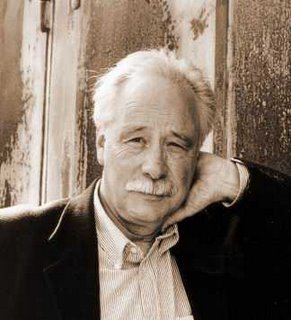

Vertigo, the third of Sebald's books to be translated into English, is how he began. It appeared in German in 1990, when its author was forty-six; three years later came The Emigrants; and two years after that The Rings of Saturn. When The Emigrants appeared in English in 1996, the acclaim bordered on awe. Here was a masterly writer, mature, autumnal even, in his persona and themes, who had delivered a book as exotic as it was irrefutable. The language was a wonder--delicate, dense, steeped in thinghood; but there were ample precedents of that in English. What seemed foreign as well as most persuasive was the preternatural authority of Sebald's voice: its gravity, its sinuosity, its precision, its freedom from all-undermining or undignified self-consciousness or irony.

In W. G. Sebald's books, a narrator who, as we are reminded occasionally, bears the name W. G. Sebald, travels about registering evidence of the mortality of nature, recoiling from the ravages of modernity, musing over the secrets of obscure lives. On some mission of investigation, triggered by a memory, or news from a world irretrievably lost, he remembers, evokes, hallucinates, grieves.


Is the narrator Sebald? Or a fictional character to whom the author has lent his name, and selected elements of his biography? Born in 1944, in a village in Germany he calls "W." in his books (and the dust jacket identifies for us as Wertach im Allgau), settled in England in his early twenties, and a career academic currently teaching modern German literature at the University of East Anglia, the author includes a scattering of allusions to these bare facts and a few others, as well as, among other self-referring documents reproduced in his books, a grainy picture of himself posed in front of a massive Lebanese cedar in The Rings of Saturn and the photo on his new passport in Vertigo.

And yet these books ask, rightly, to be considered fiction. Fiction they are, not least because there is good reason to believe that much is invented or altered, just as, surely, some of what he relates surely did happen--names, places, dates, and all. Fiction and factuality are, of course, not opposed. one of the founding claims for the novel in English is that it is a true history. What makes a work fiction is not that the story is untrue--it may well be true, in part or in whole--but its use, or extension, of a variety of devices (including false and forged documents) which produce what literary theorists call "the effects of the real." Sebald's fictions--and their accompanying visual illustration--carry the effect of the real to a plangent extreme.

This "real" narrator is an exemplary fictional construction: the promeneur solitaire of many generations of romantic literature. A solitary, even when a companion is mentioned (the Clara of the opening paragraphs of The Emigrants), the narrator is ready to undertake journeys at whim, to follow some flare-up of curiosity about a life that has just ended (as, in The Emigrants, in the story of Paul, a beloved primary school teacher, which brings the narrator back for the first time to "the new Germany," and of his Uncle Adelberth, which brings the narrator to America). Another motive for traveling is proposed in Vertigo and The Rings of Saturn, where it is clearer that the narrator is also a writer, with a writer's restlessness and writer's taste for isolation. Often the narrator begins to travel in the wake of some crisis. And usually the journey is a quest, even if the nature of that quest is not immediately apparent.

Here is the beginning of the second of the four narratives of Vertigo:

In October 1980 I traveled from England, where I had then been living for nearly twenty-five years in a country whihc was almost always under grey skies, to Vienna, hoping that a change of place would help me get over a particularly difficult period in my life. In Vienna, however, I found that the days proved inordinately long, now they were not taken up by my customary routine of writing and gardening tasks, and I literally didn't know where to turn. Every morning I would set out and walk without aim or purpose through the streets of the inner city.


This long section, entitled "All' estero" (Abroad), which takes the narrator from Vienna to various places in northern Italy, follows the opening chapter, a brilliant exercise in Brief-Life writing which recounts the biography of the much-traveled Stendhal, and is followed by a brief third chapter relating the Italian journey of another writer, "Dr. K," to some of the sites of Sebald's travels in Italy. The fourth, and last, chapter, as long as the second and complementary to it, is entitled "Il ritorno in patria" (The Return Home). The four narratives of Vertigo adumbrate all of Sebald's major themes: journeys; the lives of writers, who are also travellers; being haunted and being light. And always, there are visions of destruction. In the first narrative, Stendhal dreams, while recovering from an illness, of the great fire of Moscow; and the last narrative ends with Sebald falling asleep over his Pepys and dreaming of London destroyed by the Great Fire.

The Emigrants uses this same four-part musical structure, in which the fourth narrative is longest and most powerful. Journeys of one kind or another are at the heart of all Sebald's narratives: the narrator's own peregrinations, and the lives, all in some way displaced, that the narrator evokes.

Compare the first sentence of The Rings of Saturn:
In August 1992, when the dog days were drawing to an end, I set off to walk the country the Suffolk, in the hope of dispelling the emptiness that takes hold of me whenever I have completed a long stint of work.

The whole of The Rings of Saturn is the account of this walking trip undertaken to dispel this emptiness. For whereas the traditional tour brought one close to nature, here it measures the degree of devastation, and the opening of the book tells us that the narrator was so overcome by "the traces of destruction" he encountered that, a year to the day after beginning his tour, he was taken to a hospital in Norwich "in a state of almost total immobility."

Travels under the sign of Saturn, the emblem of melancholy, are the subject of all three books Sebald wrote in the first half of the 1990s. Destruction is his master theme: of nature (the lament for the trees destroyed by Dutch elm disease and those destroyed in the hurricane of 1987 in the next-to-last section of The Rings of Saturn); of cities; of ways of life. The Emigrants tells of a trip to Deauville in 1991, in search perhaps of "some remnants of the past," which confirms that "the once legendary resort, like everywhere else that one visits now, regardless of the country of continent, was hopelessly run down and ruined by traffic, shops and boutiques, and the insatiable urge for destruction." And the return home, in the fourth narrative of Vertigo, to W., which the narrator says he had not revisited since his childhood, is an extended recherche du temps perdu.

The climax of The Emigrants, four stories about people who have left their native lands, is the heartrending evocation--purportedly a memoir in a manuscript--of an idyllic German-Jewish childhood. The narrator goes on to describe his decision to visit the town, Kissingen, where this life had been lived, to see what traces of it remained. Because it was The Emigrants that launched Sebald in English, and because the subject of the last narrative, a famous painter given the name Max Ferber, is a German Jew sent out of Nazi Germany as a child to safety in England--his mother, who perished in the camps with his father, being the author of the memoir--the book was routinely labeled by most of the reviewers (especially, but not only, in America) as an example of Holocaust literature. Ending a book of lament with the ultimate subject of lament, The Emigrants may have set up some of Sebald's admirers for a disappointment with the work that followed it in translation, The Rings of Saturn.This book is not divided into distinct narratives but consists of a chain or progress of stories: one story leads to another. In The Rings of Saturn, the well-stocked mind speculates whether Sir Thomas Browne, visiting Holland, was present at an anatomy lesson depicted by Rembrandt; remembers a romantic interlude, during his English exile, in the life of Chateaubriand; recalls Roger Casement's noble efforts to publicize the infamies of Leopold's rule in Congo; and retells the childhood in exile and early adventures at sea of Joseph Conrad--these stories, and many others. With its cavalcade of erudite and curious anecdotes, and its tender encouters with bookish people (two lecturers on French literature, one of them a Flaubert scholar; the translator and poet Michael Hambuger), The Rings of Saturn could seem--after the high excruciation of The Emigrants--merely "literary."

It would still be a pity if the expectations about Sebald's work created by The Emigrants also influenced the reception of Vertigo, which makes still clearer the nature of his morally accelerated travel narratives--history minded in their obsessions; fictional in their reach. Travel frees the mind for the play of associations; for the afflictions (and erosions) of memory; for the savoring of solitude. The awareness of the solitary narrator is the true protagonist of Sebald's books, even when it is doing one of the things it does best: recounting, summing up, the lives of others.

Vertigo is the book in which the narrator's English life is least in evidence. And, ven more than the two succeeding books, this is a self-portrait of a mind: a restless, chronically dissatisfied mind; a harrowed mind; a mind prone to hallucinations. Walking in Vienna, he thinks he recognizes the poet Dante, banished from his hometown on pain of being burned at the stake. Sitting on the rear bunch of a vaporetto in Venice, he sees Ludwig II of Bavaria; riding on a bus along the shore of Lake Grada toward Riva, he sees an adolescent boy who looks exactly like Kafka. This narrator who defines himself as a foreigner--overhearing the babble of some German tourists in a hotel, he wishes he did not understand them; "that is, that he were the citizen of a better country, or of no country at all"--is also a mind in mourning. At one moment, the narrator says he does not know whether he is still in the land of the living or already somewhere else.

In fact, he is both: both alive and, if his imagination is the guide, posthumous. A journey is often a revisiting. It is the return to a place for some unfinished business, to retrace a memory, to repeat (or complete) an experience; to offer oneself up--as in the fourth narrative of The Emigrants--to the final, most devastating revelations. These heroic acts of remembering and retracing bring with them a price. Part of the power of Vertigo is that it dwells more on the cost of this effort. "Vertigo," the word used to translate the playful German title, Schwindel. Gefuhle (roughly: Giddiness. Feeling), hardly suggests all the kinds of panic and torpor and disorientation described in the book. IN Vertigo, he relates how, after arriving in Vienna, he walked so far that, he discovered returning to the hotel, his shoes had fallen apart. In The Rings of Saturn and, above all, in The Emigrants, the mind is less focussed on itself; the narrator is more elusive. More than the later books, Vertigo is about the narrator's own afflicted consciousness. But the laconically evoked mental distress that edges the narrator's calm , knowledgable awareness is never solipsistic, as in the literature of lesser concerns.

What anchors the unstable consciousness of the narrator is the spaciousness and acuity of the details. As travel is the generative principle of mental activity in Sebald's books, moving through space gives a kinetic rush to his marvelous descriptions, especially of the landscapes. This is a propelled narrator.

Where has one heard in English a voice of such confidence and precision, so direct in its expression of feeling, yet so respectfully devoted to "the real"? D. H. Lawrence may come to mind, and the Naipaul of The Enigma of Arrival. But they have little of the passionate bleakness of Sebald's voice. For this one must look to a German genealogy. Jean Paul, Franz Grillparzer, Adalbert Stifter, Robert Walser, the Hoffmansthal of "The Lord Chandos Letter," Thomas Bernhard are a few of the affiliations of this contemporary master of the literature of lament and of mental restlessness. The consensus about English literature for most of the past century has decreed the relentlessly elegiac and lyrical to be inappropriate for fiction, overblown, prententious. (Even so great a novel, and exception, as Virginia Woolf's The Waves has not escaped these strictures.) Postwar German literature, mindful of how congenial the grandiosity of past art and literature, particularly that of German romanticism, proved to the work of totalitarian mythmaking, has been suspicious of anything like the romantic or nostalgic relation to the past. But then only a German writer permanently domiciled abroad, in the precincts of a literature with a modern predilection for the anti-sublime, could indulge in so convincing a noble tone.

Besides the narrator's moral fervency and gifts of compassion (here he parts company with Bernhard), what keeps this writing always fresh, never merely rhetorical, is the saturated naming and visualizing in words; that, and the ever-surprising device of pictorial illustration. Pictures of train tickets or a torn-out leaf from a pocket diary, drawings, a calling card, newspaper clippings, a detail from a painting, and, of course, photographs have the charm and, in many instances, the imperfections of relics. Thus, in Vertigo, at one moment the narrator loses his passport; or rather, his hotel loses it for him. And here is document made out for the police Riva, with--a touch of mystery--the G in W.G. Sebald inked out. And the new passport, with the photograph issued by the German consulate in Milan. (Yes, this professional foreigner travels on a German passport--at least he did in 1987.) In The Emigrants these visual documents seem talismanic. It seems likely that not all of them are genuine. In The Rings of Saturn they seem, less interestingly, merely illustrative. If the narrator speaks of Swinburne, there is a small portrait of Swinburne set in the middle of the page; if relating a visit to cemetary in Suffolk, where his attention is captured by a funerary monument to a woman who died in 1799, which he describes in detail, from fulsome epitaph to the holes bored in the stone on the upper edges of the four sides, we are given a blurry little photograph of the tomb, again in the middle of the page.

In Vertigo the documents have a more poignant message. They say--It's true, what I've been telling you--which is hardly what a reader of fiction normally demands. To offer evidence at all is to endow what has been described by words with a mysterious surplus of pathos. The photographs and other relics reproduced on the page become an exquisite index of the pastness of the past.

Sometimes they seem like squiggles in Tristram Shandy; the author is being intimate with us. At other moments, these insistently proffered visual relics seems an insolent challenge to the sufficiency of the verbal. And yet, as Sebald writes in The Rings of Saturn, describing a favourite haunt, the Sailors' Reading Room in Southwold, where he over pored over entries from the log of a patrol ship anchored off the pier during the autumn of 1914, "Every time I decipher one of these entries I am astounded that a trail that has long since vanished from the air or the water remains visible here on the paper." And, he continues, closing the marbled cover of the logbook, he pondered "the mysterious survival of the written word."

~~~~~~~~~~~~~~~~~~~~~~~~~~~~~~~~~~~~

Susan Sontag

Times Literary Supplement
[February 25, 2000]