About Me
My Photo
Annie in Austin
Welcome! As "Annie in Austin" I blog about gardening in Austin, TX with occasional looks back at our former gardens in Illinois. My husband Philo & I also make videos - some use garden images as background for my original songs, some capture Austin events & sometimes we share videos of birds in our garden. Come talk about gardens, movies, music, genealogy and Austin at the Transplantable Rose and listen to my original songs on YouTube. For an overview read Three Gardens, Twenty Years. Unless noted, these words and photos are my copyrighted work.
View my complete profile
Showing posts with label Lady Bird Johnson. Show all posts

Monday, April 05, 2010

A New Song for Wildflower Time!

You might not think of me as a Wildflower Girl - all those old-fashioned garden plants, Banana shrubs and roses and iris aren't exactly native - but if I made a list of native plants fitted into the boundaries of our garden it would be pretty long and very colorful. Don't forget that the Carolina Jessamine, Coral Honeysuckle, Texas Mountain Laurel, Redbud trees, Creeping Phlox, many of the Salvias, all the Mistflowers, Purple Coneflowers, the Gauras, Skullcaps and even the wall of Mockoranges covered in buds are all really native wildflowers that have been lassooed and corralled in my yard.Annieinaustin,mockorange in bloom
The list of cooler-climate wildflowers that I grew in my Illinois gardens was pretty long, too, and if more of the free-draining, sun-loving natives would put up with my chunky clay and shade, my Native Plant Life-list would grow again. Sometimes it just takes the right spot or luck or maybe one dead tree coming down to make the wild flowers grow - after years of failure with Blackfoot Daisies they are thriving in the parkway strip and one bluebonnet grown from seed is blooming in the triangle bed. Time to celebrate - and time to sing!Annieinaustin, bluebonnets 2010
A place we've visited over and over since we moved to Texas is the Lady Bird Johnson Wildflower Center - at first just trying to get our bearings in this strange landscape,going sometimes for information, sometimes taking visitors there and sometimes for the sales of plants, shrubs and trees. (The big sale is coming up next weekend)


When Lady Bird Johnson died in July 2007 I added a verse about her love of wildflowers to a post mentioning her passing. Eventually the verses turned into a song, and finally my husband helped me turn the song into a video for YouTube with many of our favorite Wildflower photos.

Our equipment is very simple - 1 acoustic piano, 1 old lady, one cheapo mic, no vocal processing equipment and a lot of nerve.


Click to play the embedded video or watch it on our YouTube station kaefka

This song is part of a musical play-in-progress called Roots in Austin.

Saturday, July 14, 2007

Garden Bloggers Bloom Day for July

Lady Bird always loved the wild flowers
She wanted us to love them, too.
Here in the city where her wildflowers grew,
We bid our Lady Bird adieu.

The flag flies at half-mast for Lady Bird Johnson in a new garden fitted within the footprint where the Arizona Ash used to stand. I planted wildflowers like Eupatorium greggii - Gregg's Mistflower, Anisicanthus wrightii, also called Hummingbird Bush, and a plain old calico-colored Lantana, adding Salvias guaranitica and 'Black & Blue', a 'Bengal Tiger' canna and Verbena bonariensis. They're growing near the birdbath in a mixture of clay, compost and the ground-up stump of the large Ash tree. These plants are just beginning to flower, bringing an occasional butterfly, bee, or hummingbird to see if it's worth stopping here.


Malvaviscus is another flower planted to please the hummingbirds. It grows in light shade near one of the two remaining Arizona Ash trees and is sometimes called wax mallow or Turk's cap.


More wildflowers - a pink selection of Gaura lindheimerii and Echinacea purpurea 'Purple Stars'.

These Balloonflowers - probably Platycodon grandiflora - were brought along as seedlings from Illinois; planted in fall of 2004, they're now looking settled in their second Texas home.

Buds and flowers keep appearing on this 'Champagne' mini-rose, which was a mid-winter gift from my mother and sisters.


The first Amarcrinum flowers of 2007 opened yesterday. The variety is possibly 'Fred Howard'. If you're interested in amarcrinum, you can read more about it in this older post. Crinum-type lilies are not always fragrant, but this one is!

The White crepe myrtles, Lagerstroemia 'Acoma', are having a fine summer. They were twisted and curled by too many years in deck containers before we moved here and it's taken several more years to train them into tree-form again - this year they've finally grown taller than the privacy fence.


Near the corner of the veranda you can see a Pink crepe myrtle, the boxwood hedge, and hanging baskets with impatiens, ornamental sweet potato vines, oxalis and Evolvulus 'Blue Daze'. I've used only impatiens and torenia in other years, but with the Ash gone, the sun is stronger on this end of the veranda so I'm experimenting with the 'Blue Daze'.

Our 'Julia Child' rose, bought in early spring, is having a third bloom cycle! She's backed by a white coneflower and Mexican Oregano.


The Buddleja 'Black Prince' above right has been in bloom for months; the yellow lantana seems happier now that the weather has turned hot.

Perovskia - called 'Russian sage' with a true sage in the background, Salvia guaranitica.


Three cupheas are in bloom now. This orange cuphea is probably Cuphea ignea, also called cigar plant. It dies back in the cold, then grows into a shrub by the end of the summer. It's planted near another chunk of 'Bengal Tiger' canna and one of the the 'Acoma' crepes.

Above is a close-up of the orange cuphea. You can decide for yourself if it looks like a cigar!

The red and purple flowers of Cuphea llavea, nicknamed Batfaced cuphea, aren't very big, but hummingbirds always find them.

This pink cuphea also has that 'Bat-faced' look, but its growth pattern is more like the orange one - each winter it dies back to a few inches tall. It sits like an undecided lump for a few months, but with sun, warmth and water, decides that Austin is not so bad after all, and by August it's turned into a three-foot tall shrub again, covered in bees and trying to smother its neighbors.

Here's a list of some other plants showing floral action. The sunflower is just starting, plants like the coreopsis are full of buds and blossoms while others like the larkspur are almost done. Dependable workhorse plants like Abelia, Salvias and the honeysuckle have produced flowers month after month.
Abelia
Salvia 'Coral Nymph'
Liriope
Tomatoes
Peppers
Cannas
Coreopsis 'Creme Brulee'
Chrysanthemums
Petunias
Dianthus
Salvia greggii in several colors.
Pavonia lasiopetala, a native Rock Rose
Blue plumbago
Fennel
A few apricot daylilies
Larkspur
Purple leaved oxalis
'Blue River II' hardy Hibiscus
Sunflower
Vitex agnus castus
Coral honeysuckle
'Little Gem' Magnolia
Scuttelaria - skullcap
Zinnia linnearis
Happy Garden Bloggers Bloom Day, organized by Carol of May Dreams Garden.
I hope you're all having a blooming July in your own garden. We're spending time at other gardens this weekend on the annual Austin Pond Society Tour.

Wednesday, January 31, 2007

Farewell Followed by Freezes

Depressing weather is on the way, appropriate right now, since Molly Ivins died yesterday. How can both Molly Ivins and Ann Richards be gone? Whether you agreed with their ideas or not, the world needs more smartass women, not less.
[Cowtown Pattie has some good words about this Texas legend, and James of Austin has a good story, too.]

For the past week there’s been sniping among the weathermen [they seem to be all men], with some insisting that Austin should prepare for the coldest temperatures since the mid-1990’s, and others scoffingly sure we'd barely sustain a freeze. The latest prediction falls somewhere in the middle: a cold front bringing a hard freeze tomorrow night, followed by three nights in the twenties.


Philo and I went to the Lady Bird Johnson Wildflower Center last Saturday for the tree event, but we also looked at some paintings and strolled the paths.

One section of the garden celebrates the plant hunters and botanists who are remembered in the specific names of many native genuses. Austin gardeners who include Salvia greggii among their favorite plants can pay tribute to Josiah Gregg. Other plants with his name include Acacia greggii, Eupatorium greggii and Dalea greggii - those grey leaves surrounding the sign belong to Gregg's Dalea.

We didn't buy any trees, but we came home with several shrubs. That’s our new Evergreen sumac, Rhus virens, in the black container at the front.
The mature specimens of sumac on the trails were quite beautiful. We'll do our best to help this shrub thrive, by planting it as recommended in a raised bed with decomposed granite added to the soil.

There's a dwarf Nandina growing in the large terra cotta pot behind the sumac. Its leaves are green in summer, but the first cold snap turns them red, and they stay that way for months. So think twice before counting on dwarf green Nandinas as a green background for your flowers ... those ruby-red tones might screw up any spring color scheme using delicate pastel tones!

Look behind the Nandina for the Gardenia, subject of a July 14th post. That gardenia should probably go into the garage for the weekend.
Our tall, white-flowering evergreen Abelias look unchanged after the ice, but not the one Abelia that blooms pale pink.
The leaves on this Abelia still had medium green leaves in October, seen here with the stripes of Canna ‘Bengal Tiger’ in the background.

Now the canna is a cluster of brown stumps, and the Abelia leaves have responded to the ice by turning a sort of dark burgundy.


When the ice storm bent their tree branches, the result was so dramatic that the Loquat, Magnolia and Oleander got all the attention. They gradually rebounded, with some lost leaves, and a few branches that appear to be permanently bent. Philo thinks the ice actually improved the shape of Magnolia 'Little Gem'! But in the week following the freeze, everything didn't bounce back like these flexible evergreens.
Plants that usually grow easily here, some of them natives, gradually gave evidence that they may not be returning this spring. Every Salvia guaranitica, growing robustly in large stands around the yard, in different soils and various exposures, died down to the ground without leaving the usual tuft of green at the base, and the Pineapple sage doesn't look good. Texas native Tecoma stans, also called Esperanza or Yellow Bells, turned hard and brown, with no signs of life, and both Barbados Cherries look very bad. If any of the Cupheas, Durantas or Lantanas are alive, they’re hiding it well.

Although all the ice-covered Camellia flowers turned brown and mushy, the Camellia buds emerged from the ice to produce another set of blossoms.

All the blue pansies in hanging baskets and containers lost open flowers, too, but in a few days they started blooming again. This colorful scene greets me every morning when I open the curtain - but what will I see on Monday?

Thursday, January 25, 2007

THOUGHT POPS, Edition Two

A NEW BLOG DIRECTORY FROM AUSTRALIA Stuart at Gardening Tips’n’Ideas has set up a garden blog directory featuring a blog search engine and a world map dotted with Garden Bloggers. Go to his website , also linked at left, and click the banner to see how it works. You can also add your garden blog to the map. Guess what city has the most blogs so far!

DIVAS OF THE DIRTLate January is the time each year when our annual edition of the Divas of the Dirt Diary is posted, and it went up late last night. If you’re interested in reading about what the Divas have done lately - garden projects, photos, theme song and new recipes - the adventures from 2006 can be found on the Divas of the website, http://www.divasofthedirt.com/


SATURDAY- Lady Bird Johnson Wildflower Center! Diva Candy relayed this notice:
Tree Talk and Winter Walk 2007, January 27, 9 am - 5 pm.
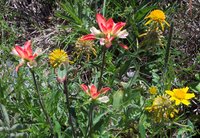
Join the Lady Bird Johnson Wildflower Center in celebrating our annual Tree Talk & Winter Walk on Saturday, January 27, where we will be helping you in “Barking Up the Right Tree”. Our event features a robust Tree Sale, with more than 80 species from which to choose. Purchase the perfect native tree for your urban landscape. Join us for walks and talks, such as how to identify & maintain native trees, & explore the importance of trees in the urban landscape. The day will include a Tree Planting demonstration, and activities for children & families. Don't forget to stop on by our Gift Store, where children's author Michael Todd will be signing copies of his book Texas State Bird Pageant from noon to 3 p.m. You can also get a 20% discount on selected items while shopping at the store (what a deal)!
This one-day free event is packed with organized walks, talks, demonstrations, children’s activities, and useful information on trees including proper tree care, maintenance, planning and landscaping with trees. Join tree experts including: arborist Don Gardner, forester Jim Houser with Texas Forest Service, arborist Guy LeBlanc, and Flo Oxley and Philip Schulze with the Lady Bird Johnson Wildflower Center . Also on hand will be participating organizations providing information about their tree related programs: TreeFolks, FireCap, and the Texas Forest Service. Enjoy the Urban-Wildland Interface exhibit, and discover information you can use for landscape planning and maintenance regarding fire safety.
Sponsored by KGSR. For more information and schedule, visit our website, at: www.wildflower.org.
Stephen Brueggerhoff, Public Programs Manager
Lady Bird Johnson Wildflower Center
4801 La Crosse Avenue
Austin, TX 78739-1702
THINKING ABOUT COMPOST Carol in Indiana [May Dreams Garden] runs the Garden Bloggers book club, with the January title called Teaming with Microbes. I’m looking forward to reading all the posts and plan to read this book eventually. While I can't do a book club post, I do have thoughts about compost.
We were composting long before we read books by Roger Swain, Eric Grissell and Michael Pollan, or had even heard the name Ruth Stout, practically the Patron Saint of Composting. We began subscribing to Organic Gardening Magazine in the middle seventies, receiving this issue in 1978.
I grew up knowing about composting in a general way: Grandma Anna had a cement bin in the alley behind her Chicago garden, complete with access door set into the front, and my dad made compost from the time we moved out to the suburbs. Philo built a compost enclosure at our first house, and when moving from one house to another in 1987, although he was willing to leave the firewood for the new owner, the whole compost pile was shoveled into sacks and hauled to our new garden.

Now our mulching mower helps the grass clippings break down where they fall. We also use this mower to chop most of the fallen leaves, digging them into the vegetable garden so they can compost over winter. We chop some leaves to use as mulch on some woodland-style beds and borders. I crack & snip smaller sticks to mix in with the mulch, and occasionally put citrus peels through the blender with water, pouring the slurry in garden beds. But we no longer have a designated compost pile or bin.

Our Northern yards were narrow and long with space for a compost pile a reasonable distance from the house. But this neighborhood has irregularly-shaped lots that are wide but very shallow, with short, winding streets. Our lot and the other 4 lots with which we share property lines don’t have right angles – they’re more like pieces of a jigsaw puzzle. Since we have no ‘out-of-the-way corners’, from any given location in my yard it’s a very short distance to a dwelling, whether my neighbors’ or my own. Instead of being manufacturers of compost, we have decided to be consumers of compost.


And you know what? It feels pretty valid to me. We can buy all sorts of compost from local organic dealers, sometimes going to the you-dig places like Garden-Ville and the Natural Gardener. We buy a great deal of Texas Native Hardwood Mulch, made by a firm here in Central Texas; using it helps keep tree trimmings out of the landfills. We buy organic liquid composts and soil activators like Medina Soil Activator and Terra-Tonic, Medina Hasta-Grow and LadyBug products.
Although we enjoyed our years of making our own compost, buying organic compost products is a good thing, too, encouraging these companies to continue composting on a large scale.